CNC Micromachining Services

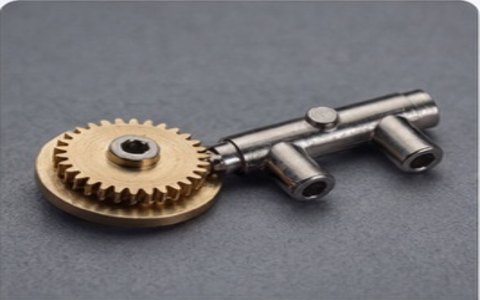
CNC micromachining
at ±10 µm
tolerances.

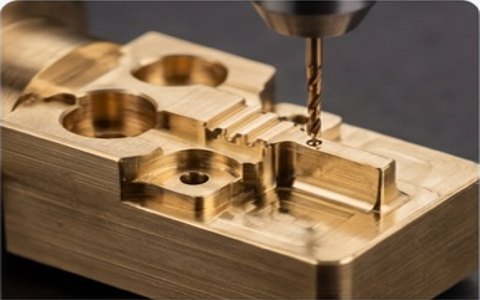
A high-precision subtractive manufacturing process that produces features, holes, channels, and threads at the microscopic scale — with tolerances held to ±10 µm and features as small as 100 µm. Goodfellow Microfabrication delivers 4-axis CNC capability combined with laser micromachining for medical, aerospace, photonics, and electronics applications.

Upload STEP, STL, or PDF — our engineers review it for manufacturability.No redesign required to start — we’ll help optimise your part.
±10 µm
Tolerance
100 µm
Min Feature
4-axis
CNC Capability
24 h
Rapid Response
1982
Established
Goodfellow Microfabrication engineering team
Why Goodfellow Microfabrication

Why choose Goodfellow Microfabrication for CNC micromachining

We deliver precision CNC micromachining for micro-scale components — supporting projects from early prototyping through to full-scale production with engineering-led manufacturing and in-house quality control.

Tight tolerance machining — achieving micro-scale tolerances for precision components in metals and polymers.
In-house quality control — full inspection and validation for consistent CNC machining results.
Scalable manufacturing — from prototype to production, maintaining accuracy and repeatability.
Multi-process capability — CNC micromachining combined with laser and hybrid fabrication methods.
Engineering support — guidance on design, tolerances, and material selection to improve manufacturability.

Talk to the engineers who will review your design

Upload STEP, STL, or PDF — our engineers review it for manufacturability.
No redesign required to start — we’ll help optimise your part.
What are you building?

Select your application

Choose the sector that best matches your project. We’ll show you the relevant materials, tolerances, and fabrication routes — and let you build your quote right here.

微流体
Technical Specifications

CNC micromachining capabilities

Engineering guidance — not fixed spec promises.

Dimensional tolerance
~10 µm achievable in plastics · ~20 µm typical in metals (design dependent)
Min feature (CNC)
100 µm features · smaller possible via hybrid CNC + laser
Axis capability
4-axis machining for undercuts, compound angles, and single-setup access
金属
SS 316L, Ti Gr23 / Gr5, aluminium, copper, nitinol
聚合物
PEEK, PMMA, COC/COP, PTFE, PC, Kapton®
Min order quantity
No MOQ — from early prototype through production transfer
Team response
24 h rapid response to new drawings, specifications, and quote requests
Inspection
Optical metrology, CMM, first-article review, and wider lab support where required

Material selection supported — customers often work with engineering to optimise for manufacturability.

Process Selection

CNC vs. laser vs. conventional machining

Use this guide to identify the right process — or combine them for the best result.

Choose the right process for your part — based on geometry, tolerance, and material.

CNC Micromachining

CNC micromachining

Best when you need:

  • Tight tolerances and structural geometry
  • Threads, undercuts, or deep features
  • Consistent precision across parts

Tolerance: ~10 µm (plastics) / ~20 µm (metals)

See CNC capabilities →
激光微加工

Laser micromachining

Best when you need:

  • Ultra-fine features or micro-holes
  • Thin materials or delicate substrates
  • Non-contact processing

Feature range: 5–50 µm

See laser capabilities →
Conventional CNC

Conventional CNC

Best when you need:

  • Larger parts (>500 µm features)
  • Simpler geometries
  • Cost efficiency at scale

Tolerance: ±25–50 µm typical

Discuss with engineering →

Have a part in mind? Upload drawing / CAD and we’ll recommend the best process.

Upload CAD (STEP, STL, IGES) or a drawing (PDF, DXF, DWG) — our engineers review it for manufacturability.

No redesign required to start — we’ll help optimise your part.

Uploads stay confidential. We can sign your NDA on request before you share files.

How It Works

Our micro-CNC process: from concept to finished part

A clear engineering workflow from first brief through material selection, DFM review, fabrication, validation, and delivery.

01
Project Brief

Submit your brief

Share your drawing, CAD file, application goal, tolerance needs, or early-stage project requirements.

02
Material

Select material

Use your own material or source precision metals, polymers, ceramics, and specialist grades through Goodfellow.

03
Engineering

Engineering review

Collaborative DFM review to align geometry, material, tolerances, process route, and manufacturability.

04
Fabrication

Manufacture & validate

Precision CNC or hybrid fabrication with inspection, measurement, and optional validation support.

05
Delivery

Deliver or scale

Move from prototype into repeat production with documented outputs, traceability, and scale-up support.

Supported by the Goodfellow Group’s integrated material, fabrication, and testing capabilities.
The Goodfellow Group

One group. End-to-end engineering capability.

The Goodfellow Group brings together material supply, precision fabrication, and testing capabilities — giving you access to a complete engineering ecosystem.

Material Supply
Goodfellow
Advanced Materials
  • 170,000+ specialist material grades
  • No minimum order, free global delivery
  • Custom dimensions on request
Explore materials →
You are here
Precision Fabrication
Goodfellow
微加工
  • CNC micromachining
  • Laser micromachining
  • Hybrid manufacturing
  • Micro-assembly & bonding
Request a quote →
Reference & Calibration
BAS
Bureau of Analysed Samples
  • Certified reference materials & analytical standards
  • Calibration and laboratory QA support
  • Traceable standards for compliance
View reference materials →
Testing & Validation
Suisse TP
Suisse Technology Partners
  • Dimensional inspection & metrology
  • Material certification & compliance testing
  • Functional & failure-investigation analysis
Explore testing capabilities →
Client Testimonials

Trusted by engineers worldwide

±8 µm across a batch of 200 titanium implant components — no rework. Genuinely exceptional.

JM
James Mitchell
MedTech Innovations

Microfluidic prototype in 48 hours for a conference deadline. On time, within spec — with a DFM note that saved us two design iterations.

SR
Dr. Sarah Rowe
University of Sheffield

The hybrid CNC + laser capability is unique. Structural features and fine holes on the same part, same day, from one vendor.

TK
Thomas Klein
Photon Dynamics GmbH
Rapid Response Quote

Ready to move forward?

Upload your drawing or request a quote — our engineering team will review your design and respond within 24 hours.

No redesign required to start — we’ll help optimise your part.

 Uploads stay confidential. We can sign your NDA on request before you share files.

1
Now

You submit your request

Name, email, description, drawing. No commitment.

2
Within hours

Engineer reviews your part

DFM check on geometry, tolerances, and material fit.

3
Within 24 hours

Quote & process path confirmed

Feasibility, recommended process, next steps.

1Your part
2Project details

Step 1 — Tell us about your part

STEP, STL, IGES, PDF, DXF, DWG or ZIP — up to 25 MB.
No commitment · 24-hour response
FAQ

Common questions

Direct answers to the engineering, materials, and process questions buyers most often ask when evaluating a microfabrication partner.

Ask a technical question
CNC micromachining is a high-precision subtractive manufacturing process used to create features below 1 mm with tolerances measured in microns. Goodfellow Microfabrication uses CNC micromachining for medical, microfluidic, photonic, semiconductor, and electronics parts that need repeatable dimensional accuracy and fine-feature control.
Goodfellow Microfabrication holds ±10 µm as standard across metals and engineering plastics. Tighter tolerances may be achievable for specific geometries after DFM review. Final capability depends on the material, feature type, and aspect ratio, which our engineers confirm before production.
Yes. Goodfellow Microfabrication machines microfluidic features in PEEK and other high-performance polymers for manifolds, diagnostic cartridges, and lab-on-chip systems. Channel geometry, depth, bonding surfaces, and tolerance stack-up are reviewed during DFM so we can confirm the right CNC or hybrid CNC-laser process before production starts.
Goodfellow Microfabrication CNC micromachines metals such as stainless steel, titanium, aluminium, nitinol, and copper; engineering plastics such as PEEK, PMMA, COC, PTFE, and Kapton®; and specialty substrates such as silicon, borosilicate glass, and Invar. Materials are sourced through Goodfellow’s wider library of 170,000+ grades.
Goodfellow Microfabrication machines CNC features down to roughly 100 µm, with finer detail available through laser or hybrid CNC-laser workflows. Minimum achievable feature size depends on the material, thickness, geometry, and tolerance requirement, so we confirm the right process during DFM review.
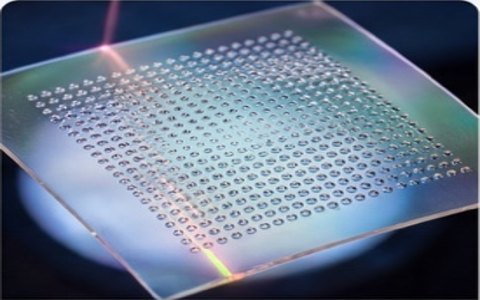
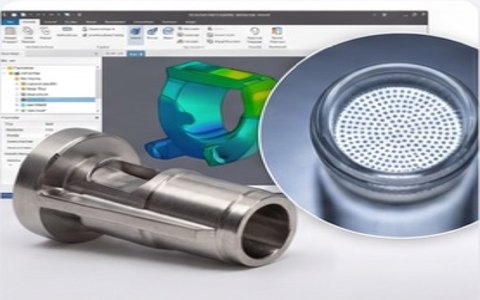
Use CNC micromachining for structural features, pockets, threads, and deeper cuts above roughly 100 µm. Use laser micromachining for very fine features, thin substrates, or dense hole arrays. Goodfellow Microfabrication combines both when a hybrid process is the best fit, allowing structural geometry and fine features to be produced within one managed workflow.
Goodfellow Microfabrication typically responds within 24 hours to new quote and drawing submissions. Once CAD, material, and tolerance requirements are reviewed, the team confirms feasibility, the recommended process path, and the next quoting steps.
Yes. You can choose a Goodfellow material, specify form and quantity, and submit it alongside your machining requirement in a single basket. Material supply is coordinated through Goodfellow Materials and machining through Goodfellow Microfabrication, which keeps procurement simpler and reduces project handoffs.
Get Started Today

Ready to machine at the micron scale?

Share your CAD files and tolerance requirements. Engineers review every design for manufacturability and respond within one business day.

Have a new or
challenging project?

We eat challenging micromanufacturing projects for breakfast (and lunch and dinner). Try us out!